Vitamin D toxicity in dogs: what FDA dog food recalls show and how formulation errors happen
Five vitamin D episodes in US dog food between 2018 and 2023 share one pattern: the error sat upstream of the bag. This alert sets out what the FDA record shows, what owners should do, and the controls that stop it recurring.
- FDA records five vitamin D episodes in US dog food from 2018 to 2023, in dry and canned products.
- Where a cause is stated it is upstream: a common contract manufacturer, a vitamin premix, or a supplier error.
- The excess was not marginal: laboratory results in 2018 found as much as about 70 times the intended amount.
- Owners should stop feeding and call a veterinarian; brands need premix controls and finished-lot testing.
01The short answer
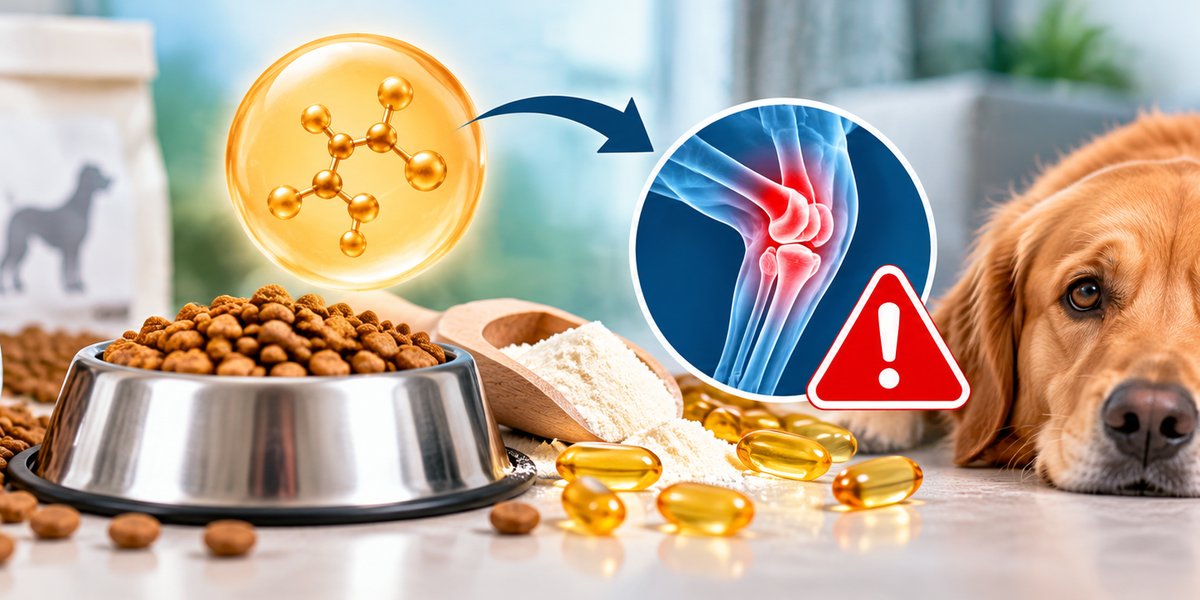
Vitamin D toxicity in dogs happens when a dog takes in too much vitamin D, which raises blood calcium and phosphorus and can lead to kidney failure 8. In US dog food it has followed errors made upstream of the bag, in a contract manufacturer, a vitamin premix or a supplier, which put far too much vitamin D3 (cholecalciferol) into finished products 147. FDA records show five episodes from 2018 to 2023, across dry and canned foods. This alert sets out what each notice stated, what owners should do, and the controls brands need before a lot is released.
02Affected products
A search for a dog food recall vitamin D on FDA’s site returns the episodes in Table 1. Check the size and lot against the notice for your product.
| Episode | Products | Size | Lot or date code |
|---|---|---|---|
| Sunshine Mills, Nov 2018 | Seven product listings under Evolve Puppy, Sportsman’s Pride Large Breed Puppy and Triumph Chicken & Rice | As listed | Best by 1 Nov 2018 to 8 Nov 2019 2 |
| FDA alert, Dec 2018 | Dry foods of several brands from one contract manufacturer, including Nature’s Promise, Abound, ELM, Orlando and Nutrisca | Dry foods | Per brand notice 1 |
| Hill’s, Jan to May 2019 | 33 varieties of canned dog food | Cans | Lots per notice; one omitted lot added later 34 |
| Fromm, Oct 2021 | Four-Star Shredded Entrée, four varieties | 12 oz cans | Best by 08/2024; about 5,500 cases 5 |
| Purina, Feb to Mar 2023 | Pro Plan Veterinary Diets EL Elemental dry dog food | 8 lb and 20 lb bags | Seven, then nine production codes 67 |
Table 1. Vitamin D episodes in US dog food recorded by FDA, compiled from the notices 1234567. Figures are as stated in each notice. UPCs are not reproduced here.
03What happened
- 26 Nov 2018Sunshine Mills recalled seven dry dog foods for potentially elevated vitamin D 2.
- 3 Dec 2018FDA alerted owners that several dry foods, made by a common contract manufacturer, contained potentially toxic amounts of vitamin D. It updated the alert on 20 December 1.
- 31 Jan 2019Hill’s recalled select canned dog food after complaints that dogs eating it showed vitamin D toxicity. The recall grew on 20 March (19 more products, after FDA asked Hill’s to test retained samples) and 17 May (one lot), and was terminated on 21 December 2021 3.
- 1 Oct 2021Fromm recalled four canned varieties. No illnesses were reported 5.
- 8 Feb 2023
- 19 Aug 2024FDA published its explainer on vitamin D toxicity in dogs 8.
The December 2018 item is FDA’s own alert. The others are company recall announcements that FDA posted. That is the practical FDA recall vs alert difference: an alert can cover several brands at once, while a recall names one company’s products.
04Why it matters for dogs and people
FDA names three routes to vitamin D poisoning: pet food that contains too much vitamin D, a household member’s vitamin D supplements, and rodenticides that contain cholecalciferol 8. Vitamin D is stored in fat tissue and the liver, so food fed every day keeps adding to the store, and diet-related toxicity tends to develop gradually. The excess can show as high blood calcium (hypercalcemia), high phosphorus (hyperphosphatemia) and kidney failure 8.
Signs in dogs
- Vomiting and loss of appetite
- Increased thirst and urination
- Excessive drooling
- Weight loss
- At toxic levels, kidney failure and death
Other sources in the home
- Human vitamin D supplements
- Rodenticides containing cholecalciferol
- No human illness was reported in the notices
The signs are those listed by FDA 18. They are not specific to vitamin D, so only a veterinarian can confirm the cause.
05What owners should do
If you have the product
- Stop feeding it.
- Check the brand, size and lot or best-by date against the notice 3.
- Keep the packaging and label.
- Call your veterinarian if your dog shows any of the signs above. Give the full diet history, including supplements and treats, and a photo of the label and lot number.
- If your dog seems well, still ask your veterinarian, because diet-related cases build up gradually. Mention any supplements and rodenticides in the house.
06Reporting a problem to FDA
Report a suspected illness through the FDA Safety Reporting Portal, or by phone to the FDA Consumer Complaint Coordinator for your state 3.
How to report
- The product name and brand.
- The lot number or best-by date, and the UPC if it is on the pack.
- Where and when you bought it.
- Your dog’s signs and the date they started.
- Your veterinarian’s contact details and any test results.
Outside the US, report to your national authority. Guires PNL also accepts confidential reports through our pet food problem form.
07Safe vitamin D levels in dog food
The margin between enough and too much is narrow, and it is measured in micrograms. For adult dogs, AAFCO sets 500 to 3,000 IU per kg of dry matter and the NRC 552 to 3,200 IU/kg 9. FEDIAF 2025 sets a nutritional maximum of 3,200 IU/kg dry matter, and the EU legal maximum for added vitamin D works out at 2,270 IU/kg dry matter 10. The 2018 excess was far outside this range: State and private laboratory results found as much as about 70 times the intended amount 1. For contrast, a 26-week trial in 40 adult beagles found no adverse effects on diets up to 9,992.5 IU/kg 9, so the recalled foods were well beyond any level tested.
AAFCO and NRC from Jewell and Panickar 9; FEDIAF nutritional and EU legal maxima from FEDIAF 2025 10. Bars are scaled to 10,000 IU/kg. The 2018 results of about 70 times the intended amount are off this scale.
View data table
| Reference | Low, IU/kg DM | High, IU/kg DM |
|---|---|---|
| AAFCO adult | 500 | 3,000 |
| NRC adult | 552 | 3,200 |
| FEDIAF 2025 adult (110 / 95 kcal minimum; nutritional maximum) | 552 / 639 | 3,200 |
| EU legal maximum, added vitamin D | – | 2,270 |
| Beagle trial diets, 26 weeks | 795.7 | 9,992.5 |
08Similar products with similar risks
The failure points behind the recalls in Table 1 can sit behind other products. Table 2 lists where excess vitamin D can arise.
| Product type | Why the risk exists |
|---|---|
| Therapeutic and elemental diets | A patient may eat one lot as its only food for months. EL Elemental was one 6. |
| Brands sharing a contract manufacturer | One error can reach several labels, as in the 2018 alert 1. |
| Foods made with one vitamin premix | Hill’s found a lot omitted from its list and said it related to the same vitamin premix behind the January recall 4. |
| Fortified treats and toppers | They go through the same micro-ingredient dosing step. This row is our inference, not an FDA finding. |
| Rodenticides and human supplements | Non-food sources that FDA lists 8. |
09What brands and buyers should look for
Brand checklist
- Premix control. Require the declared vitamin D potency, an approved supplier and a certificate of analysis for every premix lot. Reject a lot whose certificate does not match the purchase specification.
- Total every source. Add the vitamin D from the premix and from the ingredients, per kg dry matter and per 1000 kcal, and check the total against the AAFCO, FEDIAF and EU limits above.
- Reconcile units. Express the recipe, specification and certificate in the same unit.
- Validate mixing. A micro-ingredient can spread unevenly, so some bags carry far more than the average. Test distribution within a batch and between batches.
- Test the finished lot. Analyse it for vitamin D, hold it until the result confirms the target, and keep lot traceability so a problem can be confined to the affected product.
Every vitamin D recall in the FDA record started upstream and was caught too late. Control the premix, total every source, validate mixing, and hold each finished lot until a vitamin D result is back.
10Questions brands ask
What causes vitamin D toxicity in dogs from dog food?
A manufacturing or formulation error that puts too much vitamin D3 into the finished food. The FDA record ties the episodes to a common contract manufacturer, a vitamin premix and a supplier error.
What are the signs of vitamin D poisoning in dogs?
FDA lists vomiting, loss of appetite, increased thirst and urination, excessive drooling and weight loss. Toxic levels can cause kidney failure and death. Contact a veterinarian if you suspect it; this article is not veterinary advice.
How do formulation errors lead to excess vitamin D?
A wrong premix potency, an overage miscalculation, a unit mix-up, poor mixing or a mislabelled raw material. Because 3,000 IU/kg is only 75 micrograms per kg, a small micro-ingredient mistake has a large effect.
Is a vitamin D recall the same as an FDA alert?
No. An alert is FDA’s own communication and can span several brands; a recall is a company’s announcement, which FDA posts.
How can pet food brands prevent vitamin D recalls?
Control premix potency and overages, verify supplier certificates, validate mixing, and test each finished lot against AAFCO, FEDIAF and EU limits before release.
Sources
- FDA (3 Dec 2018, updated 20 Dec 2018). FDA alerts pet owners about potentially toxic levels of vitamin D in several dry pet foods [advisory]. Source ↗
- Sunshine Mills, Inc. (26 Nov 2018). Sunshine Mills, Inc. issues voluntary recall of dry dog food due to potentially elevated levels of vitamin D [company announcement, posted by FDA]. Source ↗
- FDA (31 Jan 2019, updated to 20 May 2019). FDA alerts pet owners and veterinarians about potentially toxic levels of vitamin D in 33 varieties of Hill’s canned dog food in expanded recall [advisory]. Source ↗
- Hill’s Pet Nutrition (2019). Hill’s Pet Nutrition additionally expands voluntary recall of select canned dog food for elevated vitamin D [company announcement, posted by FDA]. Source ↗
- Fromm Family Foods (1 Oct 2021). Fromm Family Foods voluntarily recalls Four-Star Shredded Entrée canned food for dogs due to elevated levels of vitamin D [company announcement, posted by FDA]. Source ↗
- Nestlé Purina PetCare Company (8 Feb 2023). Purina voluntarily recalls Purina Pro Plan Veterinary Diets EL Elemental dry dog food in the US due to potentially elevated vitamin D [company announcement, posted by FDA]. Source ↗
- Nestlé Purina PetCare Company (10 Mar 2023). Purina expands voluntary recall of Purina Pro Plan Veterinary Diets EL Elemental dry dog food in the US due to potentially elevated vitamin D [company announcement, posted by FDA]. Source ↗
- FDA (19 Aug 2024). Vitamin D toxicity in dogs [animal health literacy]. Source ↗
- Jewell DE, Panickar KS (2023). Increased dietary vitamin D was associated with increased circulating vitamin D with no observable adverse effects in adult dogs. Frontiers in Veterinary Science 10:1242851. Source ↗
- FEDIAF (2025). Nutritional Guidelines for Complete and Complementary Pet Food for Cats and Dogs. Source ↗
Evidence reviewed by the Guires Pet Nutrition Lab scientific team. This article is general information for product developers and is not legal or veterinary advice.
How to cite this article
Choose your referencing style, then copy. Check your university’s, journal’s or regulator’s guide for local variations.
Malhotra, K. (2026, October 30). Vitamin D toxicity in dogs: what FDA dog food recalls show and how formulation errors happen. Guires Pet Nutrition Lab Insights. https://www.petnutritionlab.com/insights/vitamin-d-toxicity-dogs-fda-recalls-formulation-errors
Malhotra, Karan. “Vitamin D toxicity in dogs: what FDA dog food recalls show and how formulation errors happen.” Guires Pet Nutrition Lab Insights, 30 Oct. 2026, www.petnutritionlab.com/insights/vitamin-d-toxicity-dogs-fda-recalls-formulation-errors. Accessed [date].
Malhotra, K. (2026) Vitamin D toxicity in dogs: what FDA dog food recalls show and how formulation errors happen. Available at: https://www.petnutritionlab.com/insights/vitamin-d-toxicity-dogs-fda-recalls-formulation-errors (Accessed: [date accessed]).
Malhotra, Karan. “Vitamin D toxicity in dogs: what FDA dog food recalls show and how formulation errors happen.” Guires Pet Nutrition Lab Insights. October 30, 2026. https://www.petnutritionlab.com/insights/vitamin-d-toxicity-dogs-fda-recalls-formulation-errors.
Karan Malhotra, ‘Vitamin D toxicity in dogs: what FDA dog food recalls show and how formulation errors happen’, Guires Pet Nutrition Lab Insights, 30 October 2026, <https://www.petnutritionlab.com/insights/vitamin-d-toxicity-dogs-fda-recalls-formulation-errors>, accessed [date accessed].
Malhotra K. Vitamin D toxicity in dogs: what FDA dog food recalls show and how formulation errors happen [Internet]. Guires Pet Nutrition Lab Insights; 2026 Oct 30 [cited [date]]. Available from: https://www.petnutritionlab.com/insights/vitamin-d-toxicity-dogs-fda-recalls-formulation-errors
K. Malhotra, “Vitamin D toxicity in dogs: what FDA dog food recalls show and how formulation errors happen,” Guires Pet Nutrition Lab Insights, Oct. 30, 2026. [Online]. Available: https://www.petnutritionlab.com/insights/vitamin-d-toxicity-dogs-fda-recalls-formulation-errors
@misc{guirespnl2026vitamindtoxicitydogsfdarecallsformulationerrors,
  author = {Malhotra, Karan},
  title = {{Vitamin D toxicity in dogs: what FDA dog food recalls show and how formulation errors happen}},
  year = {2026},
  month = oct,
  howpublished = {\url{https://www.petnutritionlab.com/insights/vitamin-d-toxicity-dogs-fda-recalls-formulation-errors}},
  note = {Guires Pet Nutrition Lab Insights}
}
This article summarises published evidence for product developers. Cite the original sources above for specific findings, and do not reproduce this article as your own work.
Need vitamin D checked before a lot ships?
We check total vitamin D against FEDIAF, AAFCO and EU limits, specify premix potency, and analyse finished lots before release.